

Products are a big part of your business. The products you offer define your brand identity. They are also the main source of revenue for your business.
By understanding the different types of products, you can see where your product falls in the market, understand the mindset of your customers better, and sell more online.
Ahead, learn about the types of products in commerce, so you can set yourself up for success.
What are products?
Products are anything a company sells, whether physical or digital products, or a service. In retail, products are also called merchandise. From everyday essentials to luxury items, retailers carefully select their merchandise based on market demand and consumer preferences.
For manufacturers, the term “product” covers both the raw materials purchased for production and the finished goods that are sold. These two sectors of commerce take different approaches to product development and marketing campaigns in order to succeed.
How are products classified?
Product classification is the process of categorizing products based on certain characteristics. There are various reasons for doing this, such as understanding consumer buying behavior or choosing which white label or private label products to source.
Common ways to classify products include:
- Use case for functionality, like kitchen appliances or sports equipment
- Industry or market, such as automotive or fashion
- Demographics, like products for seniors, men, or women
- Price, which can include budget, mid-range, and luxury
- Material, such as organic or wood
- Style, like modern, vintage, or bohemian
Product categories can overlap or be combined to meet consumer needs. Businesses often develop their own classification systems for different product lines to suit their specific goals.
Types of consumer products
Consumer products are goods that people buy for personal or household use. They are the trending products you find online or in-store, and are marketed specifically to individuals.
 Clothing is a type of consumer product. Shopify Burst
Convenience goods
Convenience goods are products that consumers frequently purchase with little thought or effort. These items typically are low-cost and widely available, making them easy to buy on the go.
Many businesses rely on convenience products for reliable sales and profits. However, since they’re so widely available, businesses have difficulty developing a differentiation strategy for convenience goods.
Examples of convenience goods
- Milk
- Toothpaste
- Soap
- Laundry detergent
- Magazines
- Snack foods
- Water
Shopping goods
Shopping products are items bought less frequently. They often are more durable and expensive than convenience goods and are geared toward a specific niche.
For example, when buying a new car, a shopper will look at different models to find the one with the best combination of price, fuel efficiency, safety features, and so on.
Shoppers compare products on multiple dimensions, so your products must stand out. The best way to do this is with effective marketing and branding highlighting the product’s most attractive features.
Examples of shopping goods
Sell where people search with Shopify
Shopify comes with powerful tools that help you list, promote and sell products on Google. Get your product in front of new shoppers who are looking for what you’re selling, from one back office.
Specialty goods
The consumer perceives specialty goods as something different and unique from other products. Because they offer something no other product can, they are worth the consumer’s premium price.
Businesses need a strong brand identity to convince consumers that their specialty products are worth the price. This involves differentiating the product, creating a sense of exclusivity, and fostering brand loyalty.
Examples of speciality goods
- Designer clothes
- Luxury cars
- Gourmet foods and beverages
- High-end cosmetics
- Custom jewelry
Unsought goods
Unsought products are goods that the consumer does not know about or does not think to buy. They are often expensive, risky, or complicated products.
Because unsought goods are not top of mind for consumers, businesses must work harder to generate interest and awareness. They can do this through creative marketing efforts, personal selling, and other forms of advertising.
Examples of unsought goods
- Fire extinguishers
- Medical kits
- Home security systems
- Life insurance
- Funeral services
Types of industrial products
Industrial goods are used to create other products. They are used in manufacturing or in maintaining and repairing machinery and equipment.
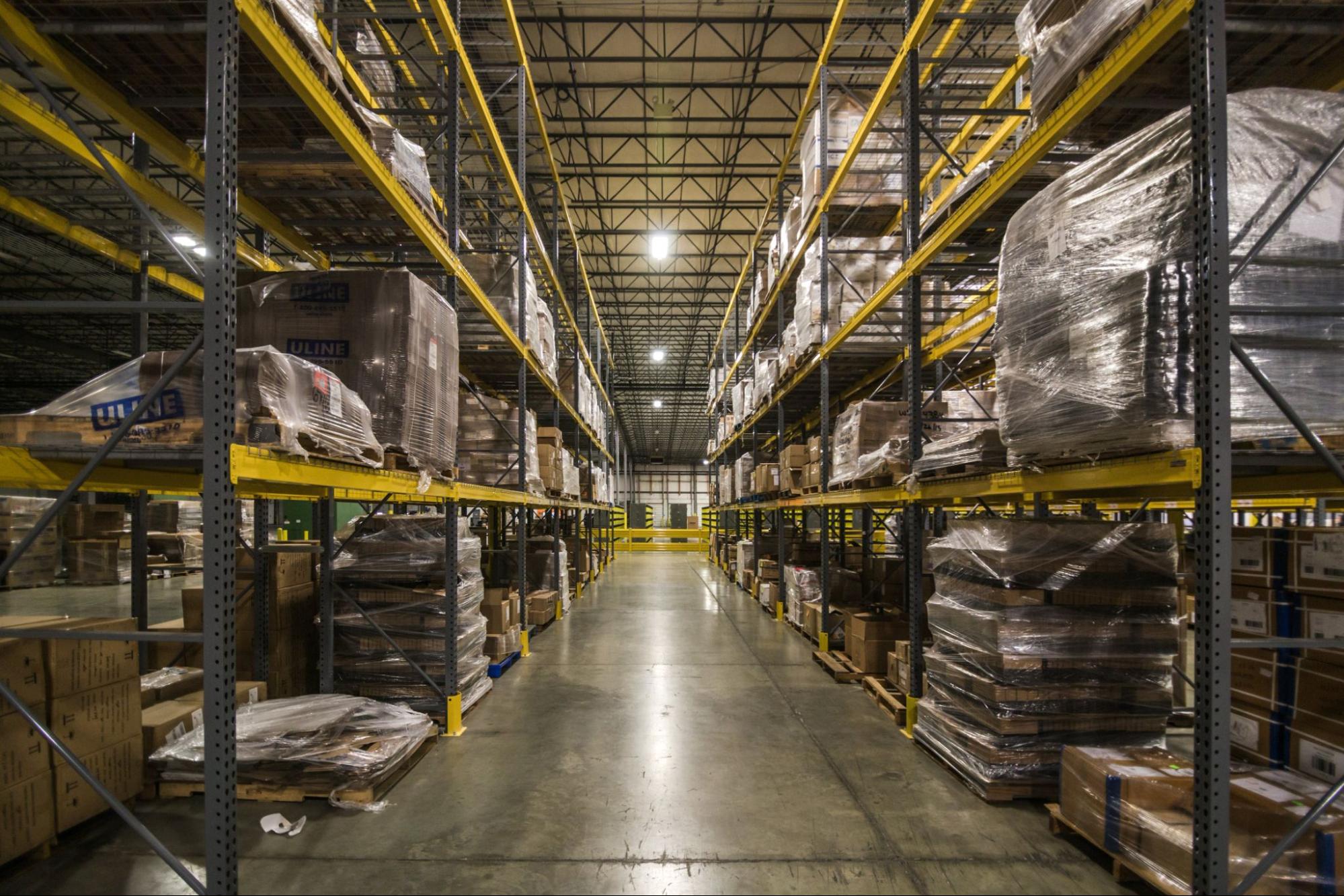 A warehouse uses industrial products to keep operations running smoothly. Shopify Burst
Raw materials
Raw materials are goods that have yet to be processed and are used to make other products. They support a diverse range of industries, such as agriculture and textiles, and contribute to global economic growth.
Because raw material costs can fluctuate based on supply and demand, it’s important to monitor the market.
Examples of raw materials
- Wheat
- Cattle
- Water
- Natural gas
- Minerals
- Wool
Processed materials
A processed material is something that has been refined in some way so it can be used in another product’s manufacturing process. Since these materials have been through a manufacturing process, they tend to have a longer shelf life.
Examples of processed materials
- Steel
- Plastics
- Refined sugar
- Glass
- Paper
- Plywood
Capital goods
Capital goods are anything that is needed for the production process, such as machines, major equipment, or tools. Raw materials and processed materials are needed to make capital goods. A computer, for instance, requires metals, glass, and plastic.
Examples of capital goods
- Machinery
- Buildings
- Vehicles
- Robots
- Software
- Computer
Intermediate goods
Intermediate goods are those products used in the manufacturing process of final goods, but are not themselves final goods. Intermediate goods can include parts and components used to produce a final product.
For example, commercially mined rock salt is an intermediate good because it is used to produce many food and nonfood consumer goods, but is not itself a final product.
Examples of intermediate goods
- Semiconductors
- Flour
- Lumber
- Cotton
- Automotive parts
Component parts
A component part is what makes up a bigger system or product. Component parts can refer to anything from the parts that make up a machine. For example, to make a car, the component parts include the engine, transmission, and brakes, among others.
Examples of component parts
- Circuit boards
- Tires
- Display screen
- Batteries
Accessory equipment
Accessory equipment doesn’t contribute to the core operation of a process or system but improves its efficiency, safety, or quality. It is often smaller and more ancillary items that are less expensive than major equipment like machines and tractors.
Examples of accessory equipment
- Printers and scanners
- Dollies
- Cash registers
- Display racks
- Conveyor belts
Operating supplies and services
A business’s operating supplies are what it needs to run day to day. They’re often used in production or maintenance but don’t directly impact the products sold.
Examples of operating supplies and services
- Stationary
- Cleaning services
- Safety equipment
- Shopping bags
- Waste disposal services
Create better products for your customers
Regardless of the business you plan to operate, one thing’s for certain: You need to offer the right types of products. Now that you know the different categories and buying behavior behind them, you can create an impactful marketing strategy and grow your business.
Types of products FAQ
Why is product classification important?
A product’s classification affects many aspects of its life cycle, including product positioning, price, the type of consumers who buy it, and the high demand for it.
What are tangible and intangible products?
Tangible products are physical items you can see and touch. Examples include clothing, furniture, and phones. Intangible products are services or benefits that you can’t experience physically, like a software subscription or an insurance policy.
How does the product type affect its pricing strategy?
Product type affects the pricing strategy a lot. Take a tangible good, for example. You have to manufacture, distribute, and warehouse the products. That all costs money, which means you have to charge customers enough to cover the expenses and earn a profit. Intangible products, like consulting services, are value-based. The price is determined by the estimated value of the service to the customer.
What is the difference between consumer and industrial products?
Consumer products are goods and services bought for personal use, like food and clothing. They have broad market appeal and advertise toward individual people. Industrial products are purchased to operate a business, which can include raw materials, machinery, or professional services.


